

How patient co-design is shaping safer, more trusted virtual wards
Early insights from the Luscii-MTW SBRI Healthcare evaluation
Partway through an SBRI Healthcare-funded evaluation led by Maidstone and Tunbridge Wells NHS Trust, in partnership with Luscii, Unity Insights, and the Health Innovation Kent Surrey Sussex (KSS), the project is already generating meaningful insights.
Early findings suggest that involving patients and the public from the outset is improving confidence, experience and trust in acute virtual wards, supporting NHS priorities around hospital-to-home care and digital transformation.
Designing virtual wards for confidence, not just capacity
This SBRI Healthcare-funded project was launched to evaluate the Maidstone and Tunbridge Wells NHS Trust Acute Virtual Ward model, while embedding patient voices directly into its ongoing design and delivery. It combines formal evaluation with meaningful patient and public involvement, aiming to ensure that virtual wards are not only clinically effective, but trusted, understood and fit for wider adoption across the NHS.
Acute virtual wards are becoming a core part of how the NHS delivers care. They support a shift towards hospital-to-home pathways, enable earlier discharge, help avoid unnecessary admissions, and underpin more preventative, patient-centred models of care.
However, as these models scale, success depends on more than technology alone. Patient confidence, clear communication, and trust in how care is delivered are critical, particularly when care moves beyond the hospital setting and into people’s homes.
For many patients, that reassurance is fundamental. As one participant in the project described,
“It was very reassuring to know there was an option to be monitored safely away from the hospital.”
Another reflected on the contrast with inpatient care, explaining how being at home transformed their experience: “I was so unhappy in the hospital and then at home, it was perfect for me. I was in bed, I was always there, and by the end of the week a nurse arrived to take the blood. It was really smooth.”
Turning patient insight into practical change
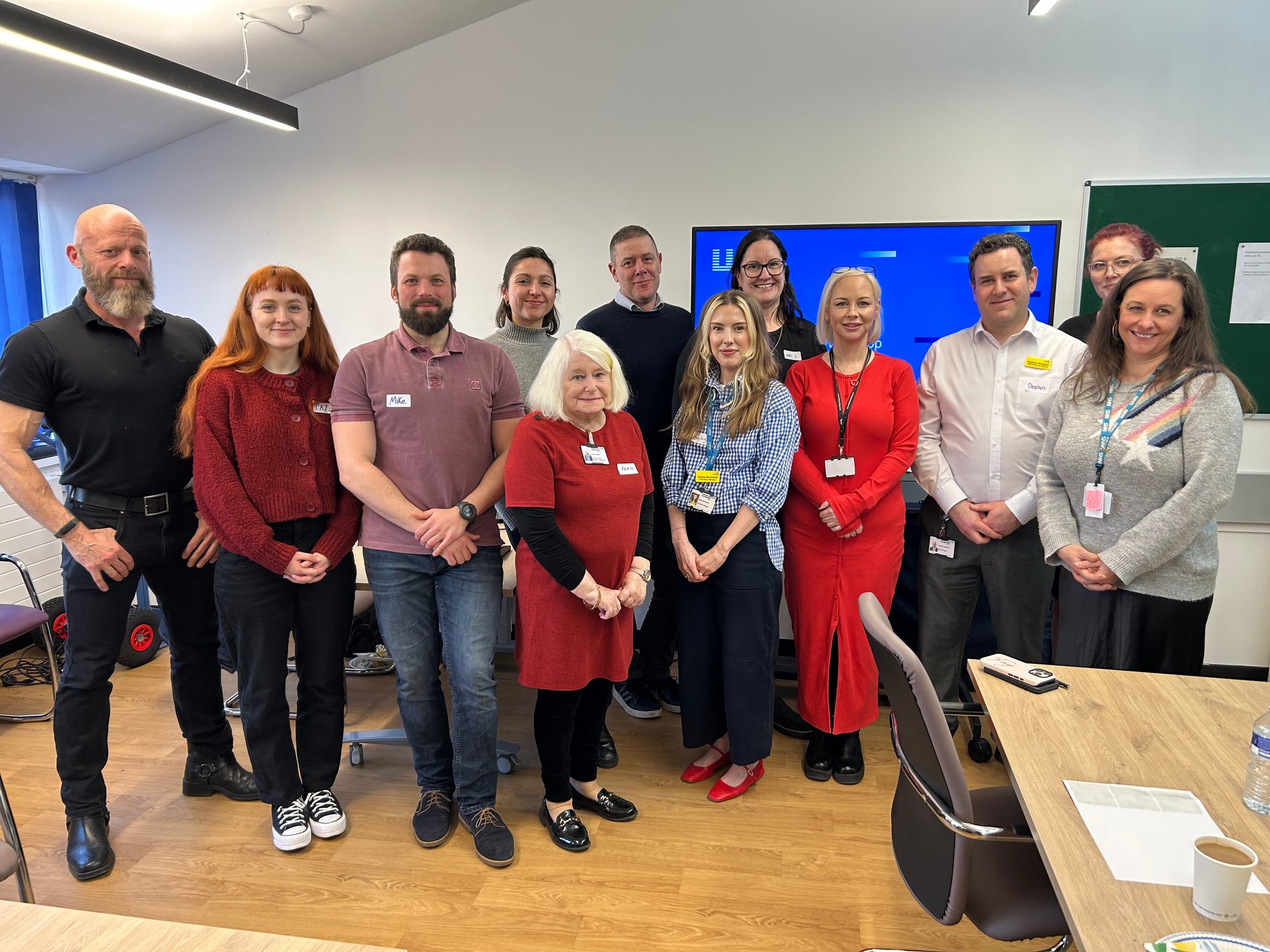
Patient and public involvement and engagement (PPIE) in this project goes beyond consultation, focusing instead on practical co-design that directly shapes how the acute virtual ward is experienced. Through the PPIE Steering Group, patients and the public are actively co-designing key elements of the acute virtual ward model, including:
- Patient and staff surveys supporting the formal evaluation
- Patient-facing communication and onboarding materials
- How virtual ward pathways are explained to patients, not just how they’re delivered
In September, the project held its third PPIE Steering Group session, bringing together people who had experienced care on the virtual ward alongside those who hadn’t. This combination of lived and external perspectives helped surface both real-world experience and broader expectations of what virtual ward care should look and feel like.
During the session, participants reviewed the current patient-facing information provided by the MTW Acute Virtual Ward team and via the Luscii app. Building on this, the group began co-designing clearer, more supportive patient information materials, with discussion focused on content, tone and communication methods. The aim is to ensure patients receive the right information, in the right way, at the right time.
A further PPIE Steering Group session in January 2026 focused on applying patient insight to the implementation toolkit for digitally enabled virtual ward pathways, while also informing future engagement at Maidstone and Tunbridge Wells NHS Trust.
The final PPIE Steering Group session, planned for the later stages of the project, will focus on reviewing and agreeing the co-designed patient-facing materials, sharing outputs from the evaluation, and outlining next steps once the project concludes.
Across each session, insight from the PPIE Steering Group has been invaluable in ensuring patient voice is fully integrated into the development of innovative, scalable models of care, helping to translate experience into action.
.png?width=1920&height=1080&name=Stats-visual-Landing-Page%20(1).png)
Early evaluation insights: What patients are telling us
Early findings from the evaluation highlight clear benefits for patients receiving care through the acute virtual ward, particularly in terms of wellbeing, reassurance and overall experience.
The vast majority of patients reported positive outcomes from being cared for at home. 94% said the option had a positive impact on their wellbeing, while 91% valued being closer to loved ones and in familiar surroundings. When asked how likely they would be to recommend the virtual ward to others, patients gave an average score of 9.09 out of 10, with older participants slightly more likely to recommend the service.
As one patient described:
“In my opinion the treatment I received at home helped enormously in my recovery. The relaxation and ability to be in my own surroundings was a very big part of my healthy state of mind.”
Alongside these benefits, the evaluation also explored how patient perceptions change over time. Prior to admission, common concerns included privacy and data security, the reliability of remote monitoring, and access to emergency or specialist care if needed. Post-discharge feedback shows that many of these concerns reduce significantly once patients experience the service in practice.
That shift in confidence is reflected in patient feedback, with one participant noting:
“Although remote, as a patient you never feel far from medical support if required.”
Taken together, these early insights suggest that experience plays a critical role in building trust, reinforcing the importance of clear communication, reassurance and patient-centred design as virtual wards continue to scale.
.png?width=1920&height=1080&name=Quotes-Landing-Page%20(1).png)
What’s working, and what’s being improved
Patient feedback highlights several aspects of the acute virtual ward that are already working well. Many participants spoke positively about the comfort of receiving care at home, the reassurance provided by ongoing monitoring, and the sense of connection with clinical teams throughout their time on the service.
As one patient shared:
“Very attentive and informative. The nurses are a credit to the service — polite, and I appreciate every one of them for being so nice.”
Another reflected on the balance between remote care and clinical support:
“It is an excellent service…Combined with the community nurse support, the virtual ward is an amazing concept and hopefully saves the NHS on costs and enables a speedier turnover of beds.”
Alongside these positives, the evaluation and PPIE discussions have also identified areas where the experience could be strengthened further. These include greater flexibility around the timing of monitoring calls, clearer communication at the point of discharge, and improved access to results and follow-up information for some patients. Additional support during onboarding was also highlighted as beneficial for certain individuals.
One participant described how gaps in communication can affect confidence:
“If I knew my blood results were low the previous day, as a patient you become incredibly nervous about what’s happened overnight.”
Insights from patients are actively informing the next stages of the project, helping to refine communication, improve consistency, and shape future iterations of the acute virtual ward model as it continues to evolve.
What's next?
The project is now moving into its next phase, building on the insight gathered so far and continuing to embed patient and public voice into both delivery and learning.
Further PPIE Steering Group sessions will focus on applying patient insight to practical outputs, including an implementation toolkit to support digitally enabled virtual ward pathways. A final PPIE session will bring together learning from across the project, reviewing and agreeing co-designed patient-facing materials, sharing evaluation findings, and outlining priorities beyond the life of the SBRI programme.
Evaluation and insight gathering will continue alongside this work, ensuring findings are captured in a way that’s meaningful and reusable. Outputs from the project will be shared through a range of formats, including a detailed case study, supporting content and a webinar, helping to inform wider NHS conversations about virtual ward care models.
As one participant reflected on the overall impact of the service, “Being on the virtual ward helped my recovery compared to an extended stay in hospital.” Another summed up the experience more simply: “The coffee is definitely a lot better at home.”

.png)
Acknowledgement
This work was commissioned and funded by SBRI Healthcare.
SBRI Healthcare is an Accelerated Access Collaborative (AAC) initiative, in partnership with the Health Innovation Network.
The views expressed in this publication are those of the author(s) and not necessarily those of SBRI Healthcare or its stakeholders.
Want to hear more about Luscii?
Luscii is the system-wide platform for health care at home. Luscii's diverse remote monitoring programmes cater to over 150 conditions, connecting the dots between acute, primary, and community care. Our clinically-proven programmes enable healthcare providers to reduce unplanned admissions, lower A&E attendances, cut costs, and deliver faster discharge.